


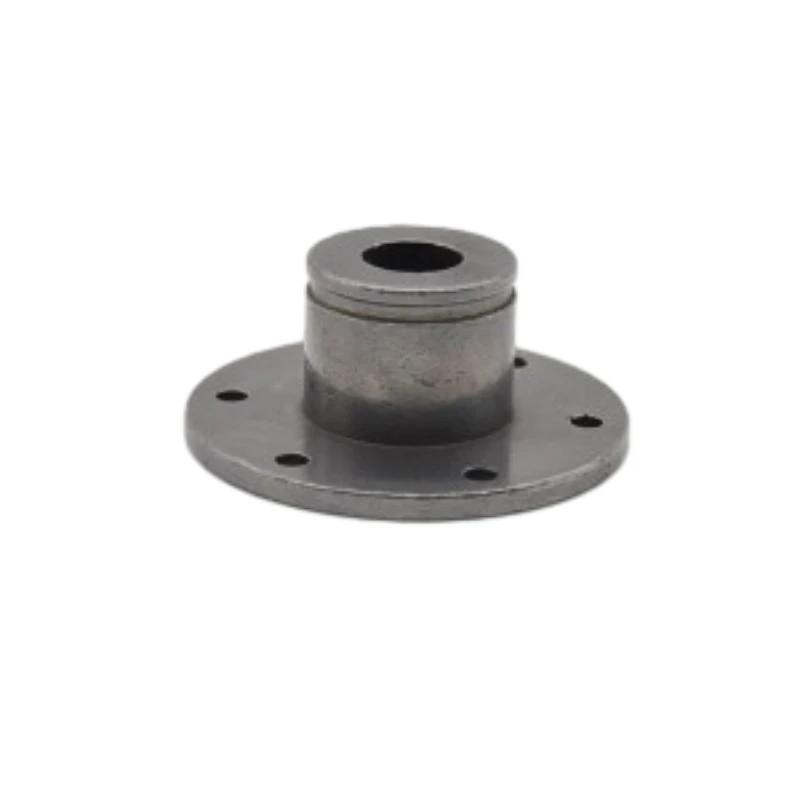




rocker arm spacers
A Practical Field Guide to the Different Types of Gear Teeth (with real factory notes) If you’ve ever sat beside a test stand listening for the faintest whine, you know gears aren’t just teeth and torque—they’re a whole language. To kick off, here’s a quick primer on the different types of gear teeth we see in the wild—and why an iron-based sintered spur might quietly outperform a pricier machined part in real-world drives. The quick tour: spur, helical, bevel, worm… and friends Spur teeth are straight and honest—efficient, easy to manufacture, brilliant in compact gearmotors. Helical teeth add a graceful angle that smooths load transfer (and noise), with axial thrust as the trade-off. Herringbone cancels the thrust, but the tooling isn’t for the faint of heart. Bevel teeth route power around a corner; spiral bevels push it further with smoother contact. Worm teeth are all about high ratios and self-locking (at the cost of efficiency). Internal gears and racks? Great for planetary stages and linear motion. That’s the spectrum most engineers juggle when they compare different types of gear teeth for a project under pressure and a launch date looming. Product spotlight: Iron-based precision pinion Spur Gearmotor Gears Manufactured in TIANSHAN INTERNATIONAL MANUFACTURING INDUSTRY PARK NO.57, YUANSHI, SHIJIAZHUANG CITY, HEBEI PROVINCE, CHINA, these powder-sintered spur pinions hit that sweet spot of cost, strength, and repeatability. I’ve seen them land in automotive actuators and e-bike drives without fuss. Honestly, that’s rare. Spec Value (≈, real-world use may vary) Material Standards MPF series, MPIF 35, DIN 30910, JIS Z2550 Density 6.2 – 7.1 g/cm³ Macro Hardness 45–80 HRA Tensile / Yield 1650 MPa / 1270 MPa Surface Treatments Quenching, polishing, oil impregnation, black oxide, full hardening, or custom Typical Gear Accuracy ISO 1328 Grade 7–9 (process-dependent) Expected Service Life ≈8,000–20,000 h with proper lubrication & load Process flow (what actually happens on the shop floor) Powder selection → compaction → sintering (typically 1120–1150°C in N2-H2) → sizing → tooth finishing → heat treat → oil impregnation → 100% visual + sampling CMM/gear roll testing (ISO 1328, AGMA checks). Advantages: low cost per unit, tight repeatability on tooth form, compact form factors with solid torque output. And yes, spur teeth remain the benchmark when you compare different types of gear teeth for small gearmotors. Where they end up (and what people say) Automotive power/seat/actuator drives (NVH-sensitive) E-bikes and small mobility motors Robotics joints, AGV wheels, HVAC dampers, printers Customer chatter: “surprisingly quiet after oil impregnation,” “held torque peaks better than the cast alternative,” and my favorite, “we stopped machining after the second pilot.” Customization knobs that matter Module 0.3–2.5 (typical), face width to 20 mm, pressure angle 20° (14.5°/25° on request), profile mods (tip relief, crowning), carbon content per MPIF 35 grade, black oxide or phosphate, and grease compatibility tuning. If you’re weighing different types of gear teeth , profile modification is the quiet hero for NVH. Vendor landscape (my shorthand comparison) Vendor Process Lead Time Tolerance Certs Unit Cost JSSintering (Hebei) Powder metallurgy + heat treat 3–6 weeks ISO 1328 G7–9 ISO 9001, IATF 16949 Low Vendor A (machined) CNC hobbing + grinding 5–10 weeks G4–6 possible ISO 9001 High Vendor B (casting) Investment casting + finish 6–8 weeks G9–10 typical ISO 9001 Medium Case note: quieting an e-bike drive A European e-mobility brand switched from machined spur to sintered, keeping module/PA but adding micro tip relief and oil impregnation. Net: ≈2.8 dB(A) reduction at 3,000 rpm motor speed and 6% cost down. To be honest, the NVH win surprised their finance team more than engineering. Standards, testing, and data sanity Dimensional and profile checks per ISO 1328; strength modeling via ISO 6336 or AGMA 2001; material to MPIF 35 with DIN 30910/JIS Z2550 references. Routine tests: macro hardness (HRA), density, tensile bars, gear roll test, and run-in noise checks. Results above are from typical factory runs; your load spectrum and lubricant will shift life curves, as always. References: MPIF Standard 35 – Materials Standards for PM Structural Parts. ISO 1328-1:2013 – Cylindrical gears — ISO system of accuracy. ISO 6336 / AGMA 2001-D04 – Calculation of load capacity of spur and helical gears. DIN 30910; JIS Z2550 – Sintered metal materials and testing.


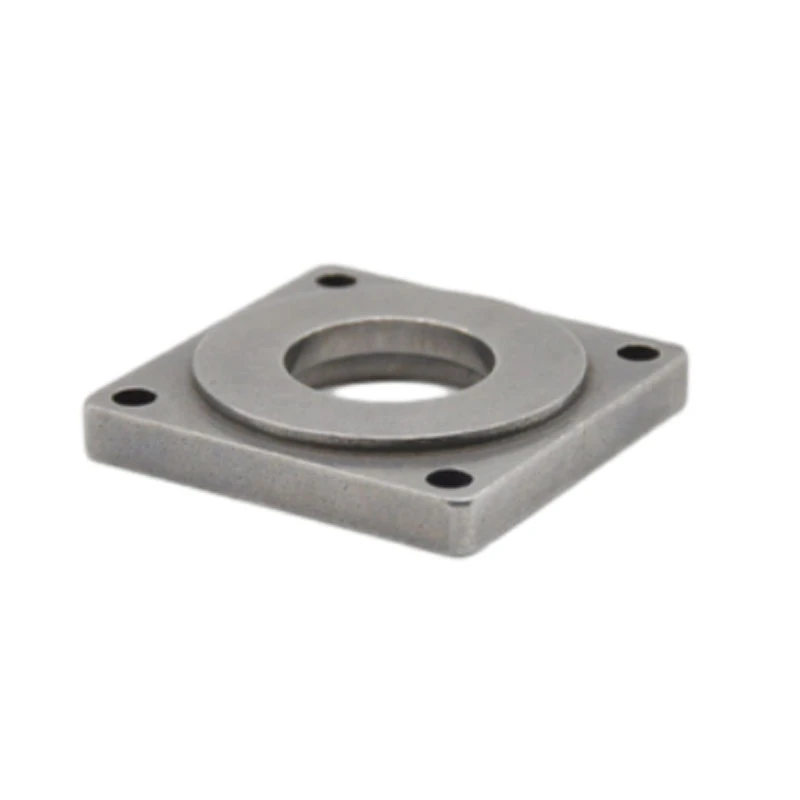
Lifting Sling Types: Secure Your Loads Safely & Efficiently
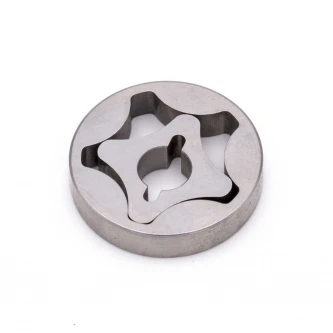
Water Pump Wheel-Shijiazhuang Jingshi New Material Science and Technology Co., Ltd.|Precision Engineering,Industrial & Automotive Applications

Durable Camshaft Replacement: Boost Honda & Motorcycle Engine Power
Subscribe For Newsletter

Shijiazhuang JingShi New Material Science and Technology Co., Ltd was founded since 2014, located in Shijiazhuang, Hebei province, China. The company covers an area of over 10,000 square meters and has


PRODUCTS

QUICK LINKS
CONTACT US
Address:TIANSHAN INTERNATIONAL MANUFACTURING INDUSTRY PARK NO.57, YUANSHI, SHIJIAZHUANG CITY, HEBEI PROVINCE, CHINA
Address:TIANSHAN INTERNATIONAL MANUFACTURING INDUSTRY PARK NO.57, YUANSHI, SHIJIAZHUANG CITY, HEBEI PROVINCE, CHINA